Olumo
Olumo empowers leaders to build better workplaces through honest employee feedback. The platform goes beyond data collection, it guides managers, HR teams, and business owners toward meaningful actions that improve employee wellbeing and drive business results.
My role
I was the Principal Designer for the web app, owning the requirements and shaping the entire end-to-end experience. Olumo has a lot of interconnected pieces, so a big part of my work was mapping out how everything fit together and making sure the flow felt seamless. That meant spending a lot of time iterating on conceptual wireframes long before jumping into visual design.
Challenge
Olumo's MVP revealed a critical gap: customers were drowning in employee feedback data but lacked clear paths to action. Leaders received survey results showing scores between 1 and 100 for ambiguous metrics, leaving them confused rather than empowered. Our mission became clear: transform raw data into confident decision-making.
Making Data Human
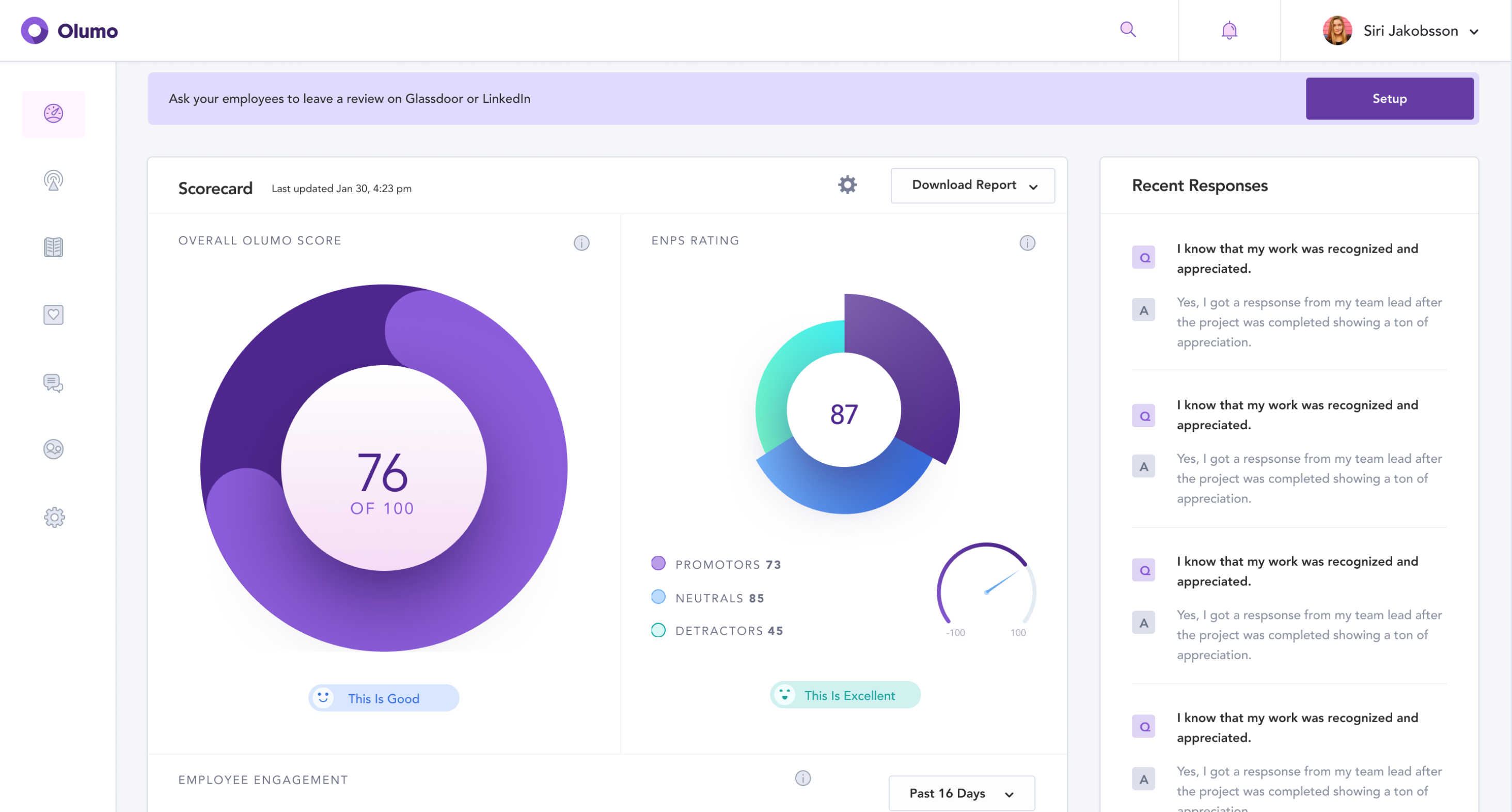
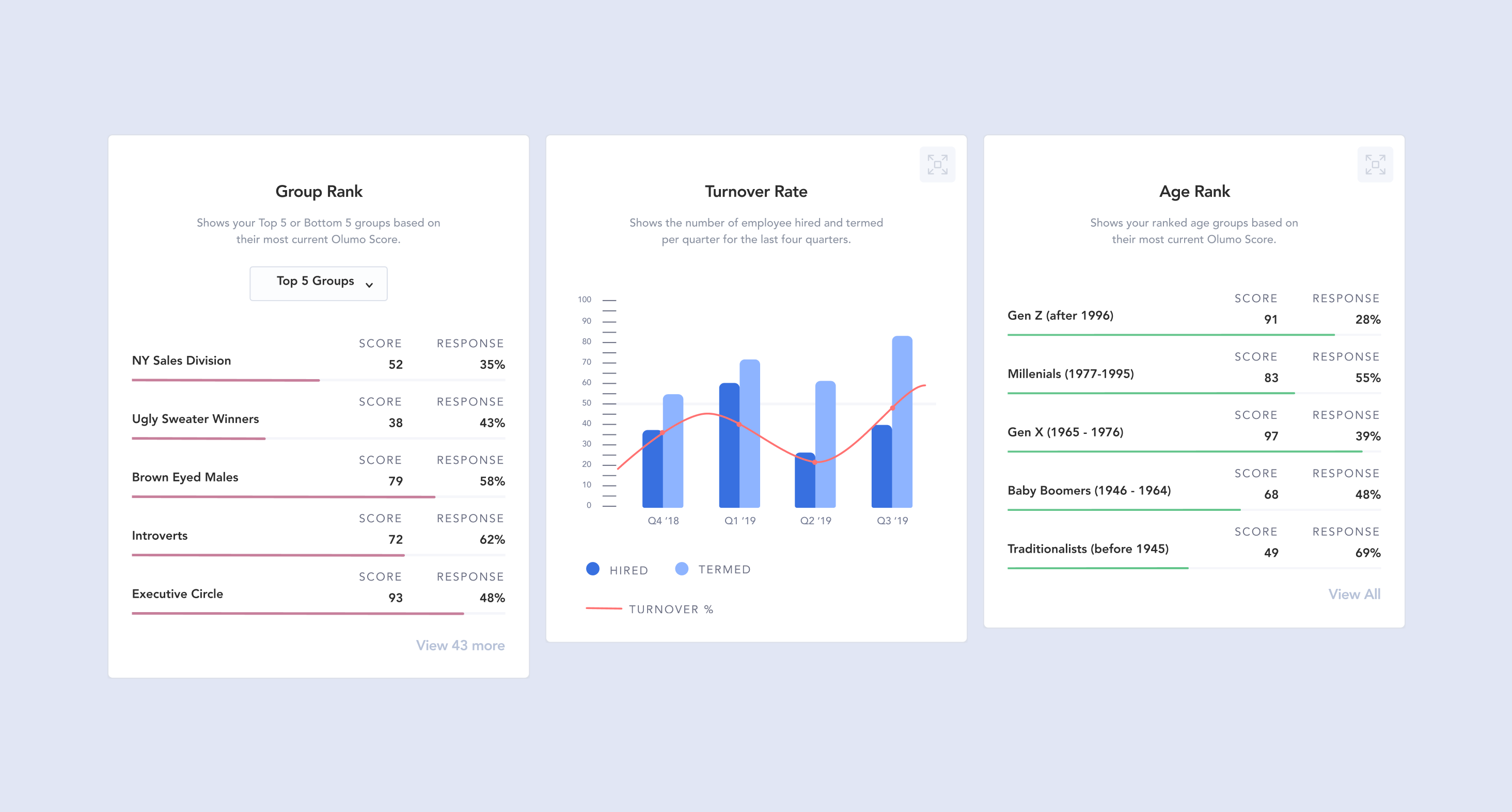
Leaders were overwhelmed by cryptic metric names and unclear scoring ranges, so we rewrote all metric copy to be more descriptive and action-oriented. We added contextual tooltips that explained what each metric represented and why it mattered. The visual design was also modernized to match the updated brand while keeping the data simple to interpret.
Global Filtering & Anonymity
Since Olumo surfaces company-wide metrics on almost every screen, it became clear the filter needed to be global instead of limited to a few pages. That meant we had to think through how a single filter would affect every part of the app, what it would improve and where it could create problems.
The biggest challenge was anonymity. Employee feedback is always anonymous, but if a leader filtered the data down too far, they could start guessing who said what. To prevent that, we added a safeguard. Whenever a filter narrowed the results to 14 or fewer employees, the system displayed a message saying, "Not enough employees selected for filter anonymity." It kept leaders from drilling down too far and protected the trust the platform relied on.
Playbooks
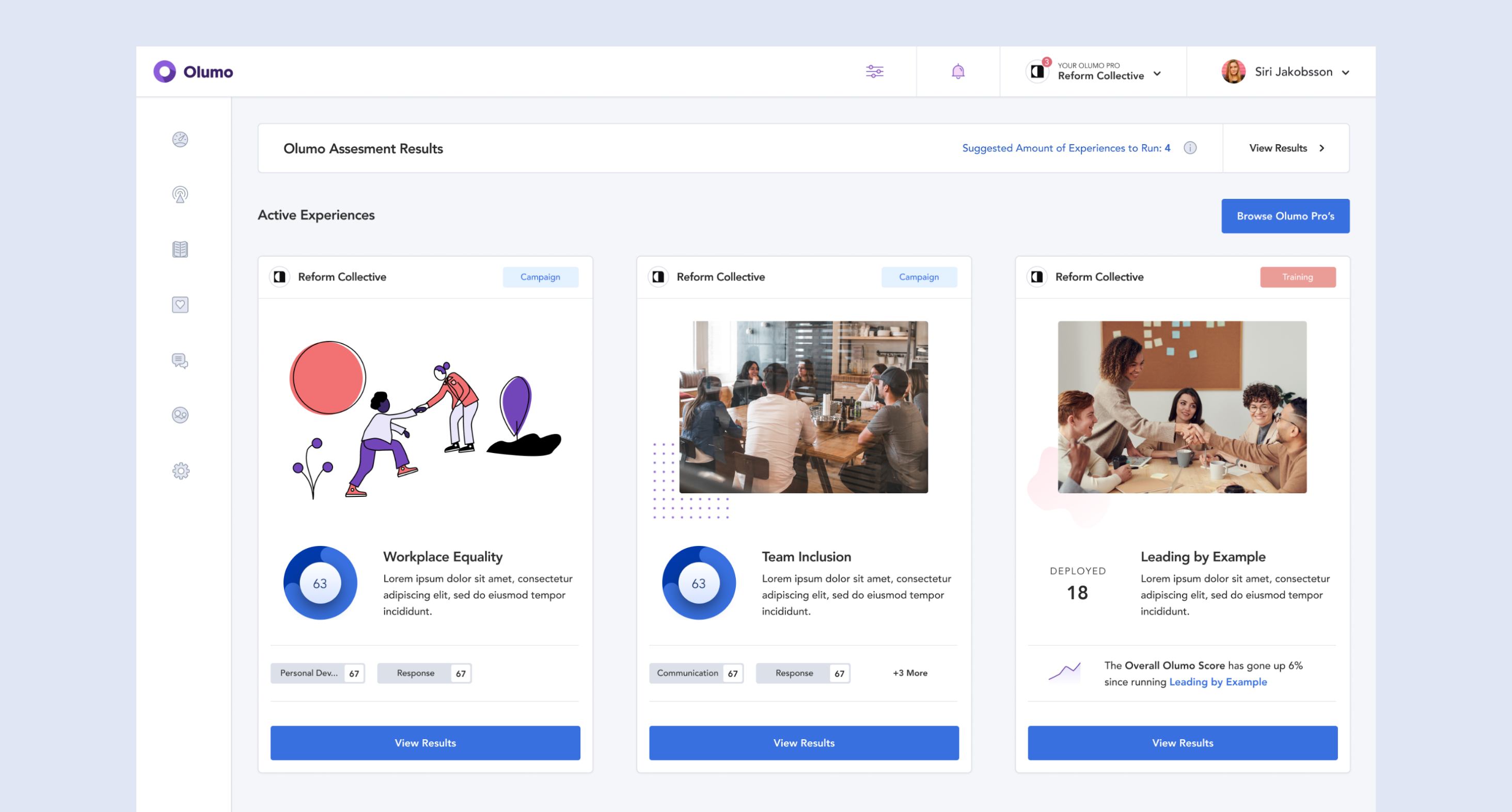
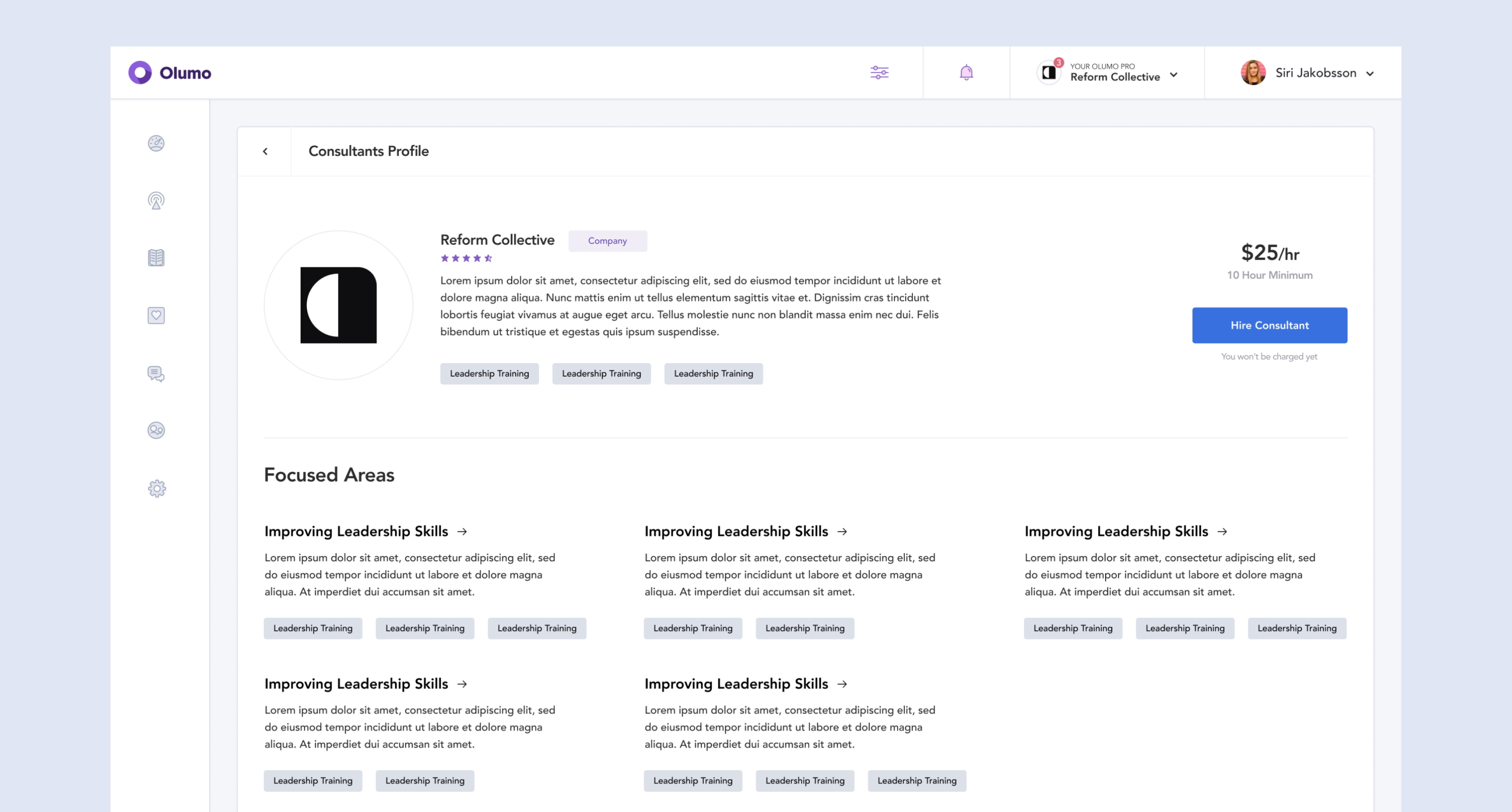
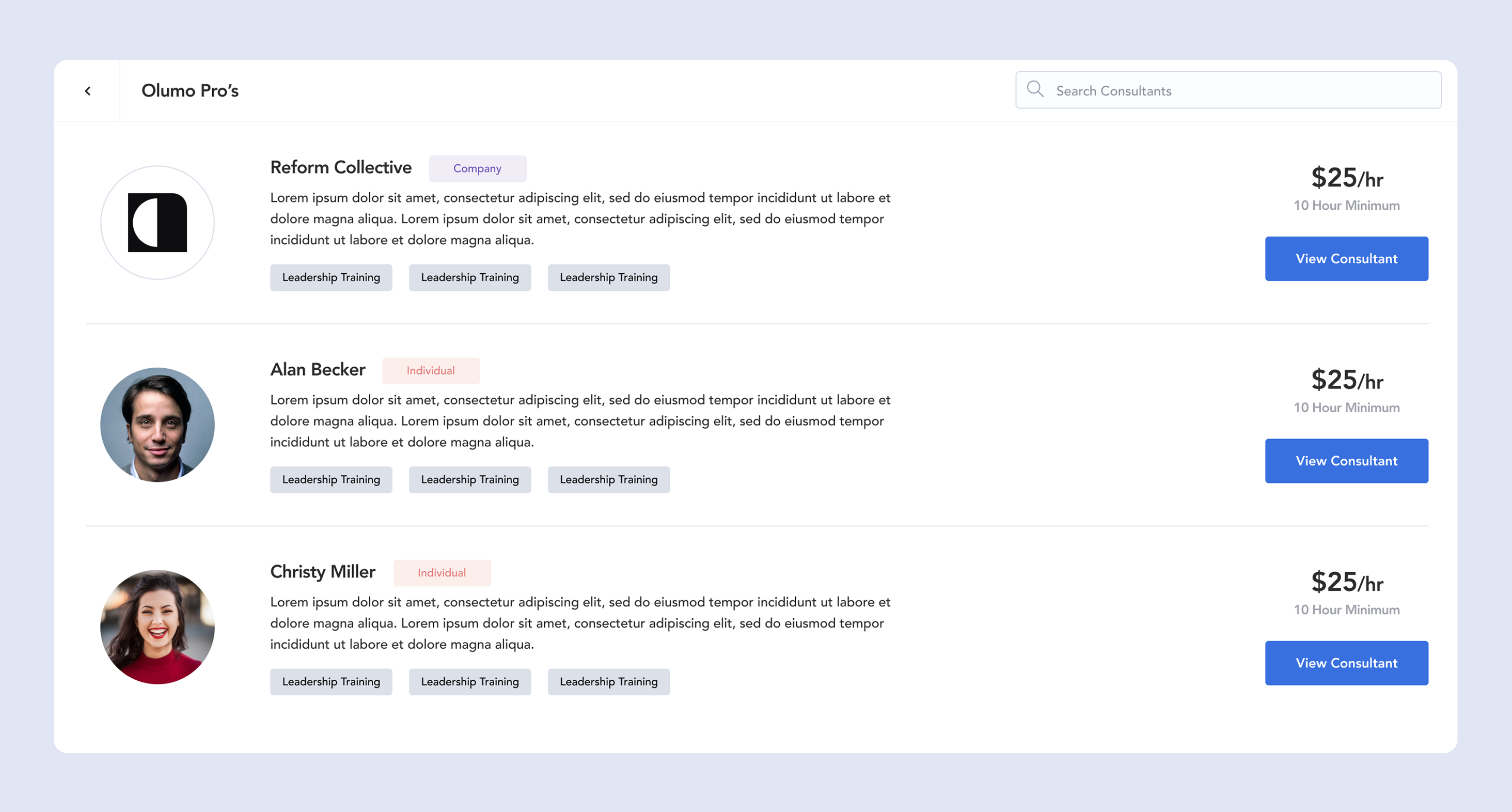
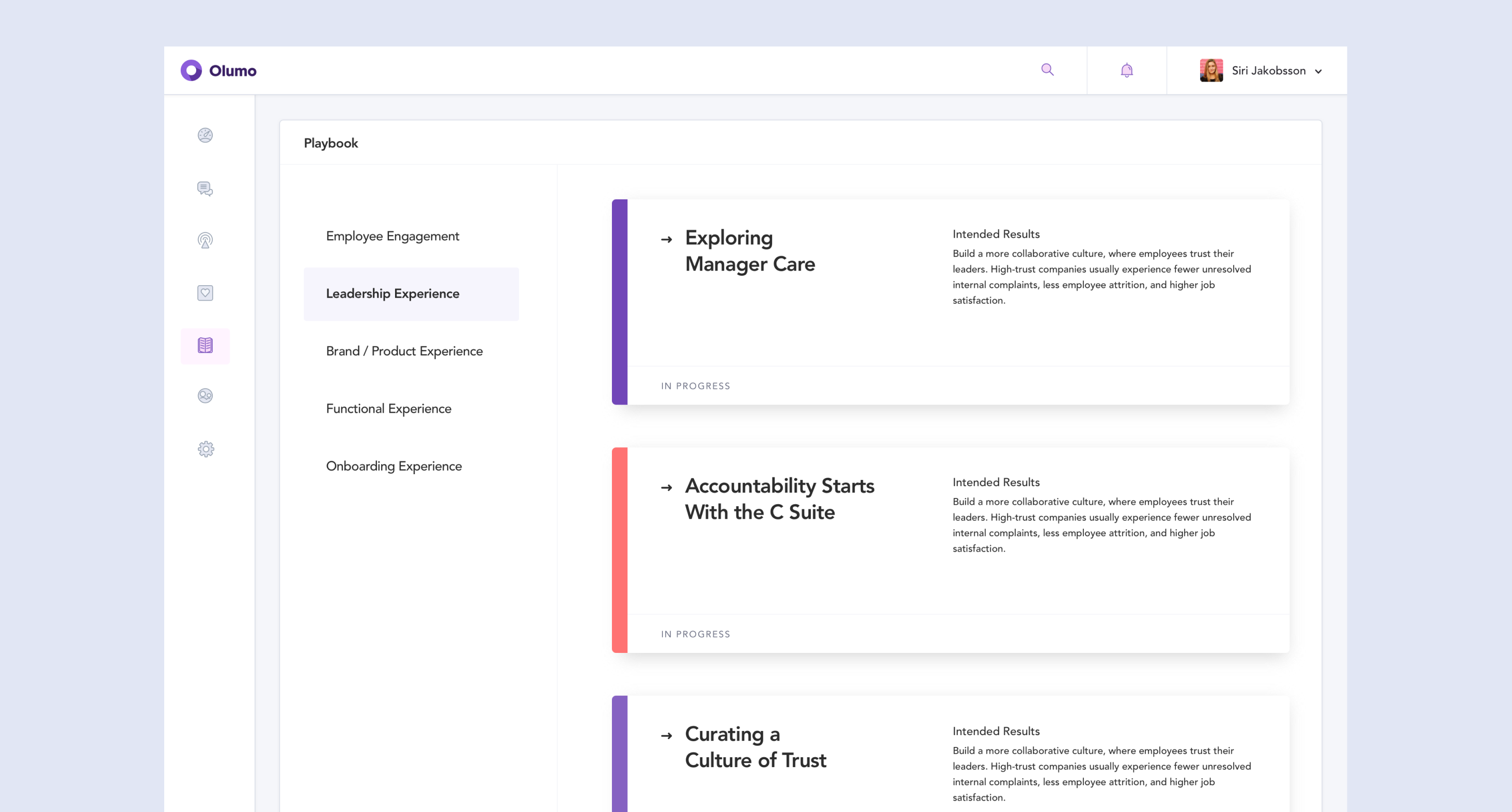
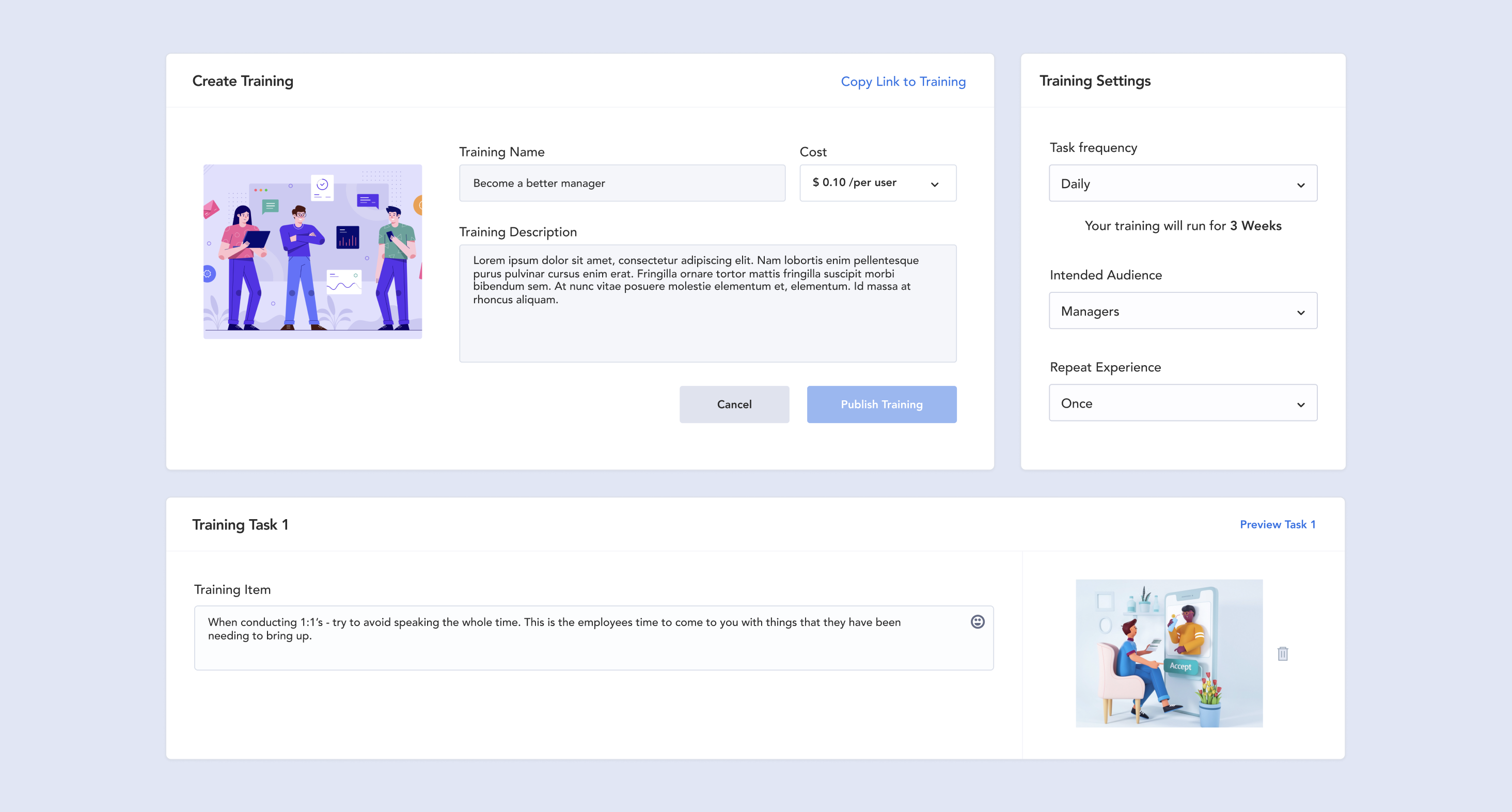
Even with clearer data, many leaders weren't sure how to act on low metrics. We solved this by creating interactive playbooks, guides that identified struggling areas and provided step-by-step improvement plans. Each playbook combined expert coaching, best practices, and prompted follow-up surveys to track progress. This evolved into one of Olumo's defining features.
Reflection
This project reminded me that data only matters when people know what to do with it. Once we focused on the full journey, from making the information easy to understand to helping leaders actually act on it, the product shifted from a confusing MVP into something that genuinely helps workplaces get better.